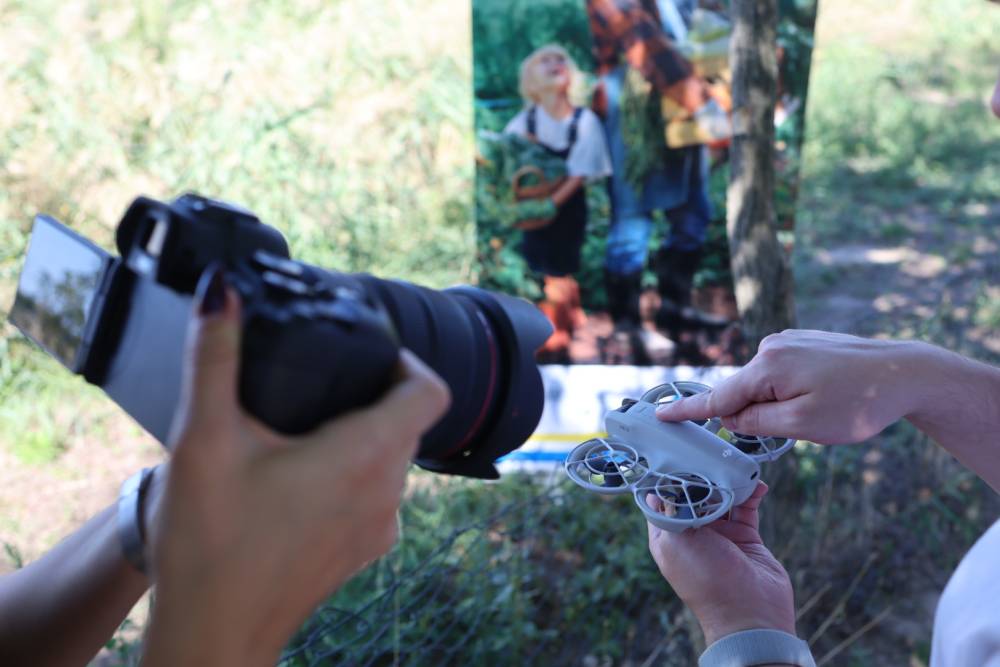
Interviewees from Serbia clearly emphasize the desire to preserve tradition while adapting to modern market demands through ecological and organic production, increasing added value, and direct sales. They highlight the importance of education, product quality, and building trust with customers, while simultaneously embracing new technologies and innovations. Furthermore, the connection between agriculture and tourism is seen as an important path for the development and strengthening of local communities. László Berényi has been engaged in organic fruit production for over fifteen years, following the principles of regenerative agriculture. He strives to preserve natural flavors and maintain a sustainable farm, continuously developing his offerings and maintaining a direct connection with customers. “I feel much better since I have been fully dedicated to this over the past two years. I know that I am not polluting others or myself, and that matters to me now. It is more important than profit, because even though there isn’t much, we still live off it,” says Berényi. Vedran Kuntić decided to oppose the fast pace of modern life and the mass food production market by returning to traditional, local, and high-quality food production after ten years of developing his family farm in Bikovo. He simultaneously expanded his offerings and connected with customers through a store in the city center. “From day one, I have proudly said that I am the youngest person who is both a producer and a seller of my own products. This is very rare, especially at the market… I think the most important thing is to be honest in what we do, and that is the recipe for our current success,” says Kuntić. Oskar Kovač, a young chef with experience in top Michelin-starred restaurants, decided to apply his knowledge and passion for high-quality food to his homeland at the family farm Salaš Kovač 1920. In 2020, he and his family purchased an old school building and transformed it into a sustainable and authentic rural environment, where they cultivate local traditional values, organic, and biodynamic agriculture. “Throughout my career, I have always believed that quality is the most important, and that we must learn to work sustainably, respecting tradition and using local ingredients,” says Kovač. Documentary films featuring a total of 20 such producers will soon be presented to the public on both sides of the border. The project “Enhancing Cross-Border Cooperation in Sustainable Rural Ecotourism and Cultural Heritage Preservation,” abbreviated as RuralFoodTour, is implemented by the associations Digitalna Regija from Subotica and SZÓ-TÉR Egyesület from Szeged, Hungary. The project is valued at €247,773, of which the European Union donation amounts to €210,607.05. The Interreg VI-A Hungary-Serbia Program is implemented within the European Union financial framework for 2021–2027 through the Instrument for Pre-Accession Assistance (IPA). Based on the “joint management” system of the participating countries – Hungary and Serbia – the Program finances and supports cooperation projects of organizations located in the Program area: in Hungary, this includes the counties of Csongrád-Csanád and Bács-Kiskun, and in Serbia, the districts of West Bačka, North Bačka, South Bačka, North Banat, Central Banat, South Banat, and Srem. The Program contributes to the development of a stable and collaborative region, as well as the improvement of the overall quality of life in the border area. It enables economic cooperation between organizations from both countries, fosters a shared identity, preserves the cultural and historical heritage of the border region, and contributes to its ecological sustainability and safety. For more information, visit: www.hungary-serbia.eu



.png)

